
Evidence for communications that cannot get lost in noise
In hospitals and clinics, some notices need more than delivery: they need defined audiences, official versions, tracked reading, and searchable history.
Use this flow for protocols, conduct rules, mandatory training, and sensitive guidance.
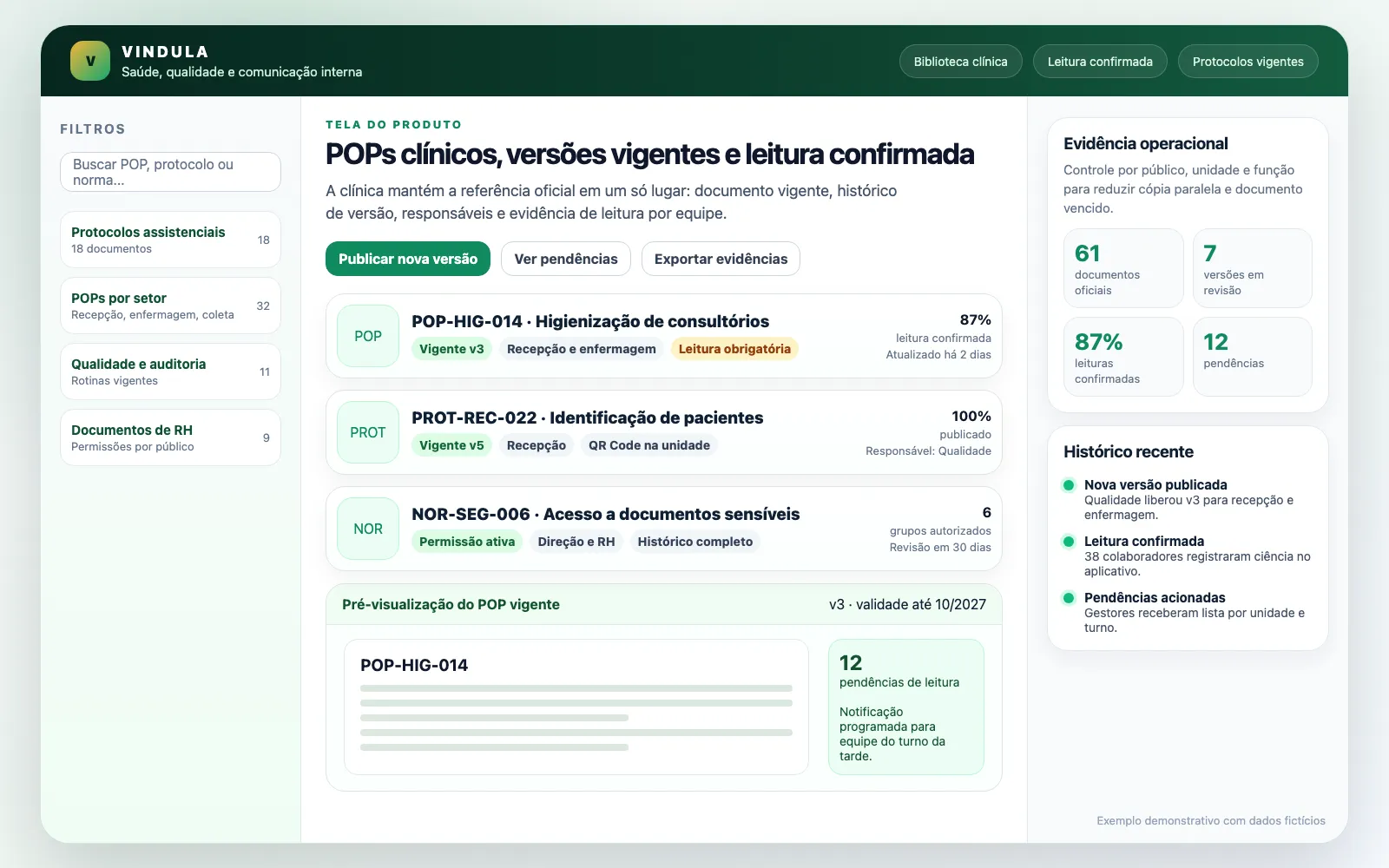
Evidence comes from the audience, version, and tracking of the communication.
Recommended flow
Treat critical communications as a process, not forwarding
The official channel becomes more useful when the message starts with defined audience, version, and tracking.
Define audience
Choose the unit, area, role, group, or people who need to receive the guidance.
Publish the official version
Centralize text, attachments, and related documents in the company's reference environment.
Track reading
When criticality requires it, track receipt, reading, acknowledgment, and pending items by audience.
Evidence
What becomes visible
The focus is reducing operational uncertainty: who needed to know, which content applied, and where pending items remain.
Who should receive it
The communication stops being an open message and gains a planned audience.
Who read or remains pending
Leaders track status without depending on screenshots, manual forwarding, or parallel spreadsheets.
Which version was communicated
When there is a document, SOP, or attachment, the team checks the current reference and related history.
ONA/JCI FAQ
Common questions about evidence and accreditation
Vindula helps organize internal evidence. It does not replace criteria, audits, or external validation.
Does this replace the accreditation process?
No. Vindula supports communication, document, and internal record organization. Accreditation assessment and criteria remain with the responsible institution.
When should confirmed reading be used?
Use it when the message requires operational evidence: a new protocol, conduct change, mandatory training, safety guidance, or relevant internal policy.
How should shifts and employees without individual email be handled?
The access design can consider identifiers and audiences defined by the company. The point is to plan who receives it, where they access it, and how reading will be tracked.
What is the recommended first flow to test?
Choose a real communication with a clear audience and operational impact: protocol update, new conduct rule, safety guidance, or mandatory training.
Want to test this flow with real communications?
The 30-day pilot lets you start with one unit and 3 to 5 critical communications before expanding.