
Knowledge Base Corporate
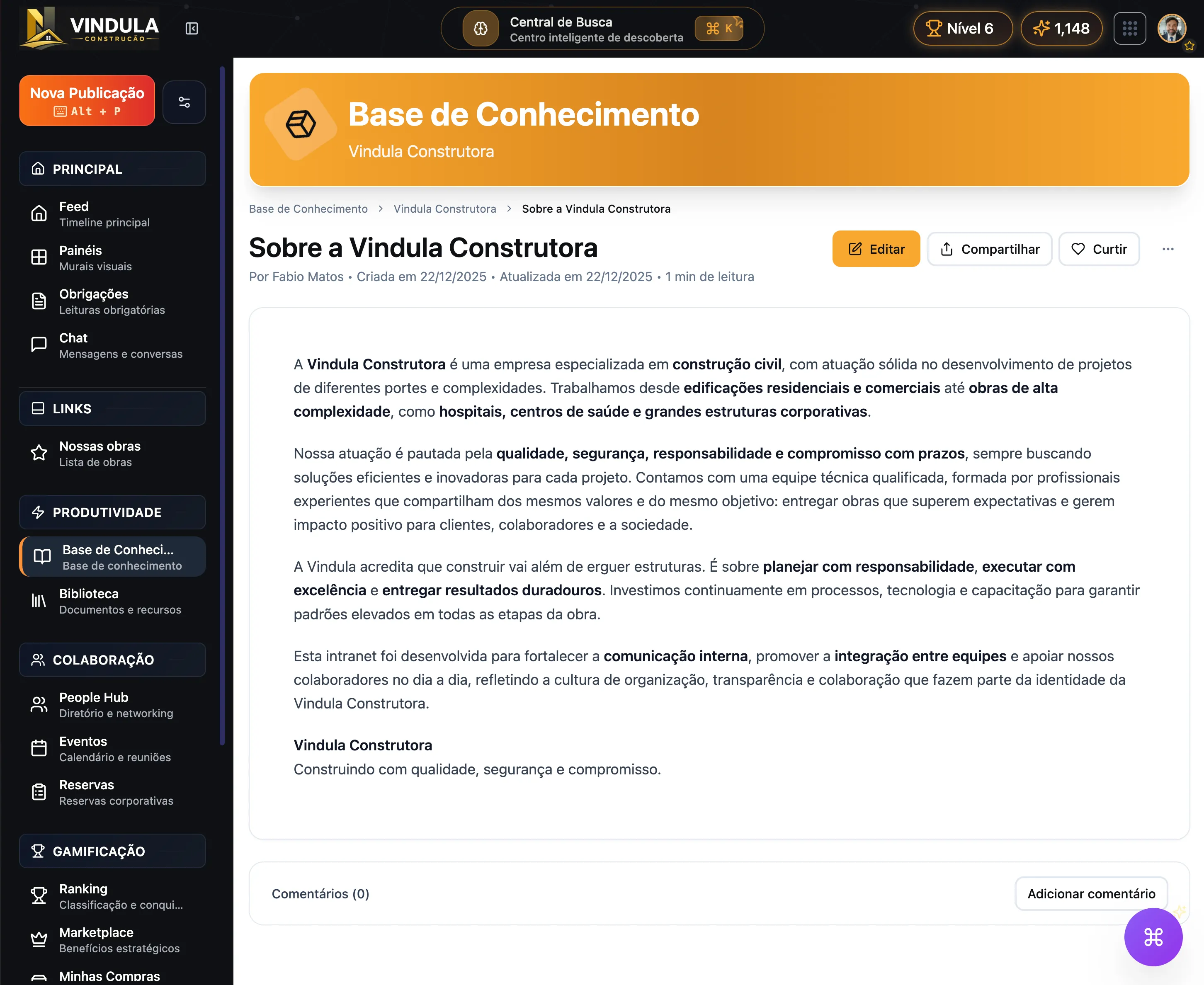
Organize policies, manuals, and recurring answers in one trusted place. Reduce rework and operational doubt with versioned content, permissions, and usage indicators.
See how to organize policies, manuals, and recurring knowledge in Vindula.
When internal knowledge needs to be reliable
Single reference for policies and manuals
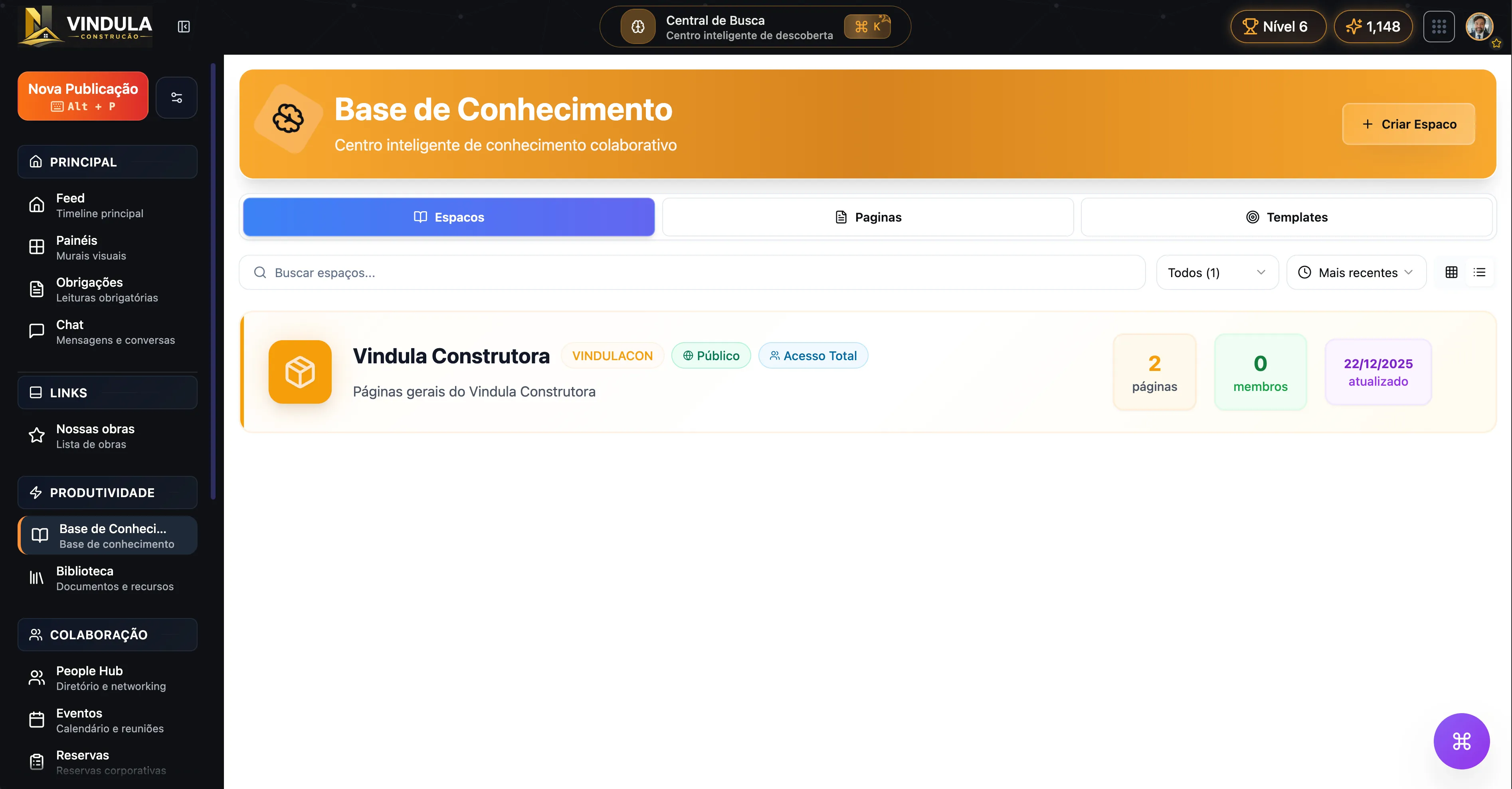
Vindula's Knowledge Base helps your company centralize policies, manuals, procedures, and recurring answers in an environment with ownership, structure, and controlled access. Each area can organize content by topic, keep related pages together, and make employee lookup easier without relying on loose messages or duplicated files. The value appears when teams find the right guidance faster and the company can see which content needs updating.
Organization by areas and topics
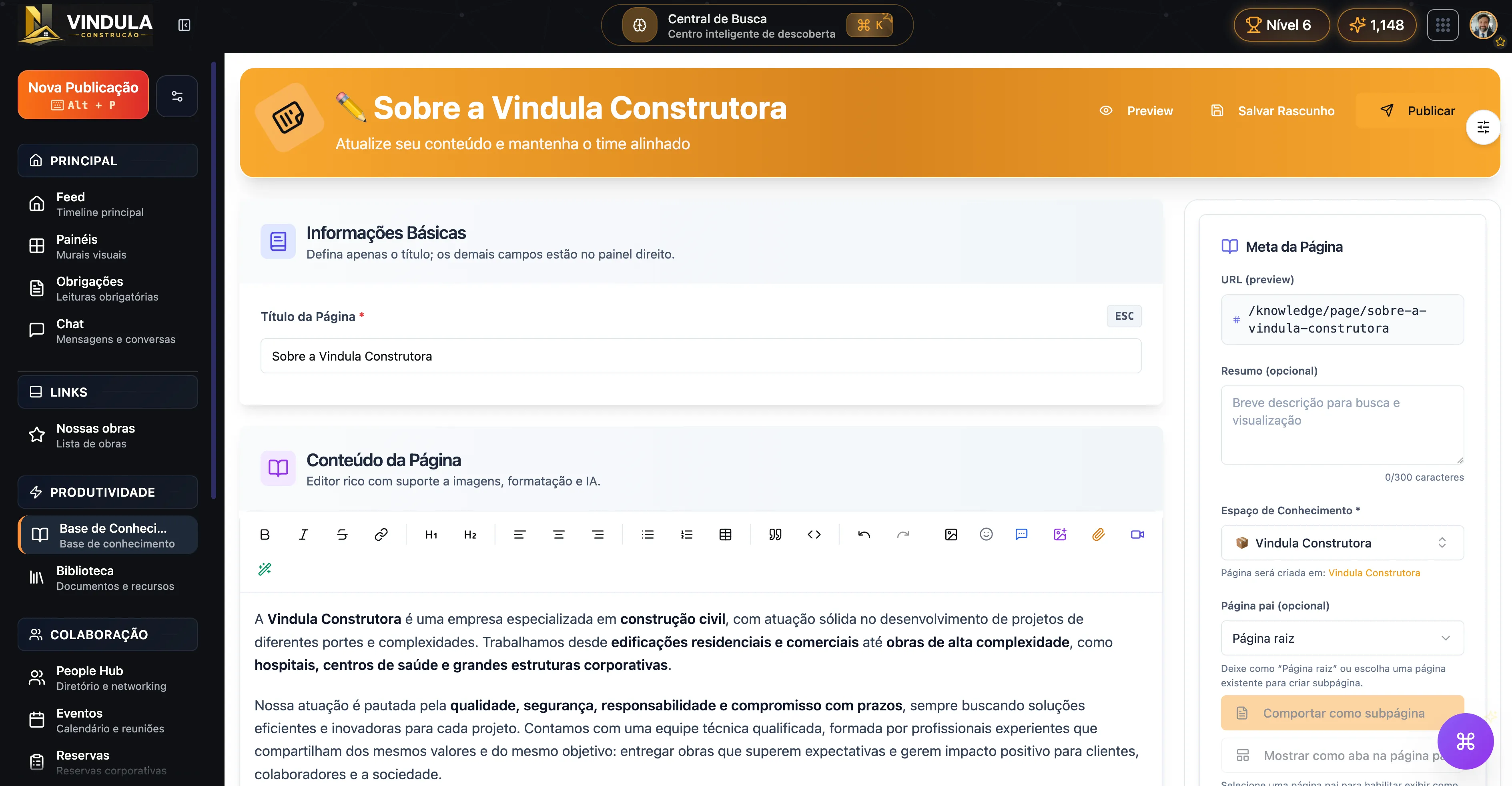
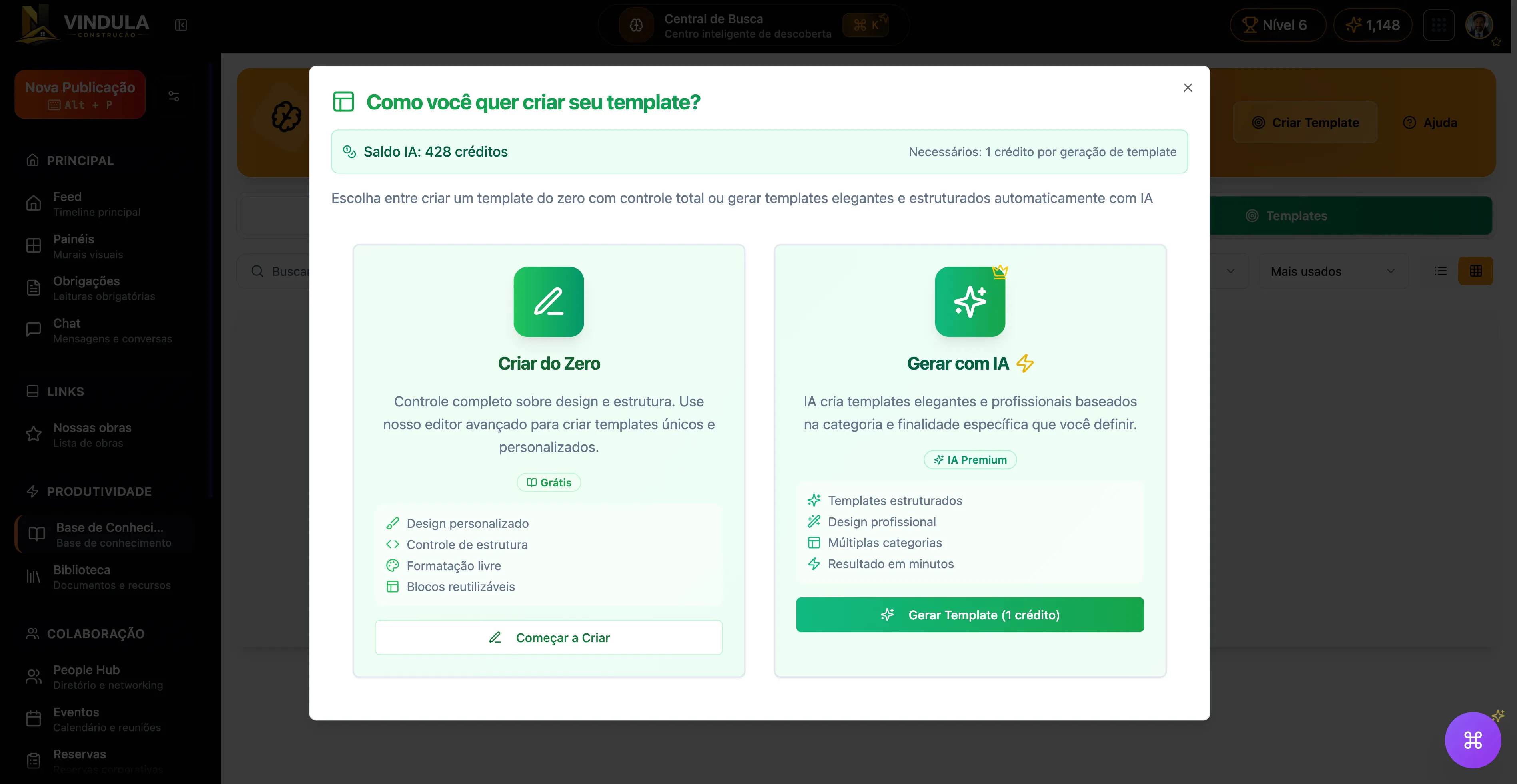
Knowledge can be separated by company areas, topics, or routines. Inside each space, hierarchical pages and templates help standardize recurring content such as policies, internal FAQs, process guidance, and support materials. This reduces variation between areas and makes updates easier when a rule changes.
Governance and access control
The Knowledge Base lets you define who can view, edit, moderate, or administer content. Spaces can be open for broad consultation or restricted to specific groups depending on the information type. This helps HR, Communications, Quality, and Operations publish with autonomy without losing governance.
Lookup and collaboration
Views, favorites, likes, and comments help show what employees actually consult. These signals indicate relevant content, frequent questions, and pages that should be revised or communicated better.
Usage indicators and export
Administrators and moderators can track accesses by period, most viewed pages, and participation by space. Data can be exported to support internal analysis, audits, and content improvement decisions.
AI applied to knowledge (when enabled)
The Knowledge Base can use AI as a support layer to speed up content review, refinement, and organization. AI can help with: • text refinement and review • content improvement suggestions • organization and duplicate prevention These resources operate with rules and administrative control, respecting permissions, context, and privacy.
Controls to keep knowledge reliable
Knowledge spaces (public and private)
Hierarchical pages
Reusable templates
Rich content editor
Permissions and member control
Required reads (when applicable)
Comments, likes, favorites, and views
Usage indicators
Data export
AI for creation and refinement support
Where the base helps most
HR / L&D (policies, onboarding, standardization)
Internal Communication (governed official content)
Leaders and managers (single source + access evidence)
Operational teams (quick lookup with clear context)
What changes in daily work
- Knowledge organized by area, topic, and routine
- Clear permissions to publish and consult
- Less dependence on messages and duplicated files
- Indicators to review important content
- AI as support, not replacement
FAQ
Does the Knowledge Base replace external wikis?
Yes. It centralizes corporate knowledge with structure, control, and metrics.
Can access be restricted by area or team?
Yes. Access is controlled by permissions and space members.
Is AI mandatory?
No. AI enters as a complementary support layer, and the Knowledge Base still makes sense on its own to organize content, consultation, and governance.
See demo
See how to organize policies, manuals, and recurring questions in a governed base.