
Test critical communication in one unit before expanding
A short scope for hospitals and clinics to validate audience, reading, pending items, and evidence reporting using real routine communications.
The pilot is suited for companies that want to reduce risk before a broader implementation.
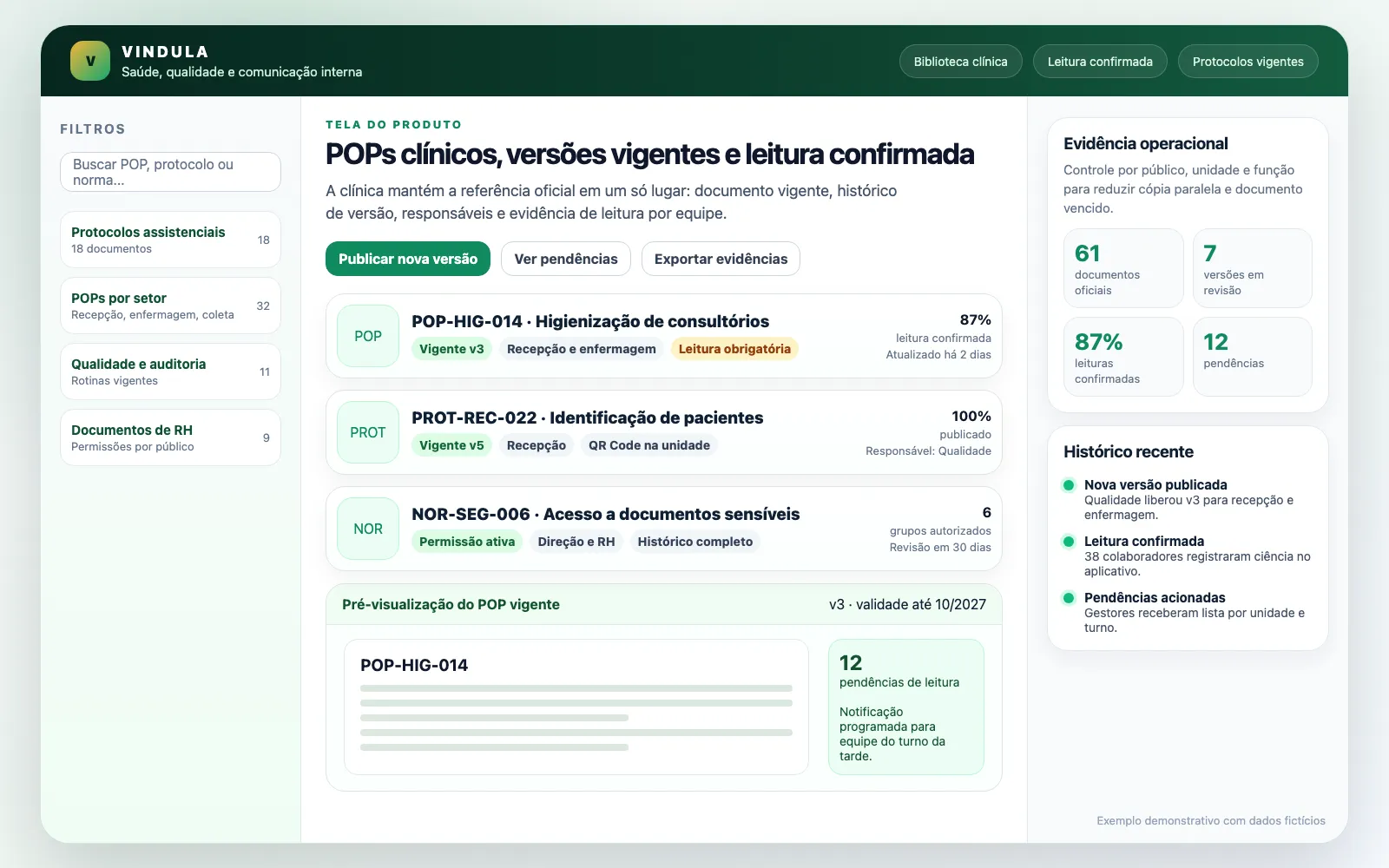
Use real communications to measure fit, not generic presentations.
Scope
What the pilot includes
The scope needs to be small enough to happen and real enough to generate useful learning.
1 unit or area
Choose one hospital, clinic, care unit, quality team, HR, or internal communications area.
3 to 5 real communications
Use messages that already exist in the routine: protocol, training, conduct, safety, or policy.
30 days of tracking
The period covers setup, publication, read tracking, and learnings closure.
How it works
Three steps to leave improvisation
The pilot starts from a concrete problem, publishes with governance, and closes with operational evidence.
1. Flow scope
We define the unit, audience, and communications that truly need an official source.
2. Assisted publication
We organize content, attachments, audience, and reading rules for each pilot communication.
3. Closing report
We consolidate reads, pending items, segmentation used, bottlenecks, and recommended next steps.
Success criteria
What to measure during the 30 days
The evaluation does not need to promise business results. It needs to show whether the flow fits and reduces uncertainty.
Reach by audience
Who should receive it and what the status was for each group or unit.
Reading and pending items
Who read, who acknowledged when applicable, and where pending items remain.
Time to publish
How much effort the team needed to move from loose messaging to governed communication.
Limits
What the pilot does not try to solve alone
Clear limits protect the decision: the pilot validates one critical flow before committing the whole operation.
Not a full implementation
The pilot does not try to cover the entire network, every module, or every area at once.
No accreditation promise
The goal is to generate internal evidence and operational learning. External criteria follow their own processes.
Based on real operations
Use real communications and defined audiences to understand operational fit.
Frequently asked questions
How to prepare the pilot
Who should participate in the pilot?
Usually HR, internal communications, quality, operations, and one IT contact participate depending on the selected scope.
Which communications should be chosen?
Choose messages with a clear audience and real impact: protocol, safety guidance, conduct update, policy, or mandatory training.
What happens after 30 days?
The final report shows fit, adjustment points, and a recommendation to expand, contract, or close without expansion.
Ready to choose a first critical flow?
Bring to the conversation a communication, protocol, or training that needs better proof than screenshots and forwarding.