
Governed intranet for units, shifts, and operational safety
It makes sense for fuel station networks that need to standardize communication by unit, keep procedures current, and ensure safety alerts reach everyone.
When units, attendants, management, and safety share the same problem of outdated procedures and alerts without reach, the governed intranet becomes stronger.
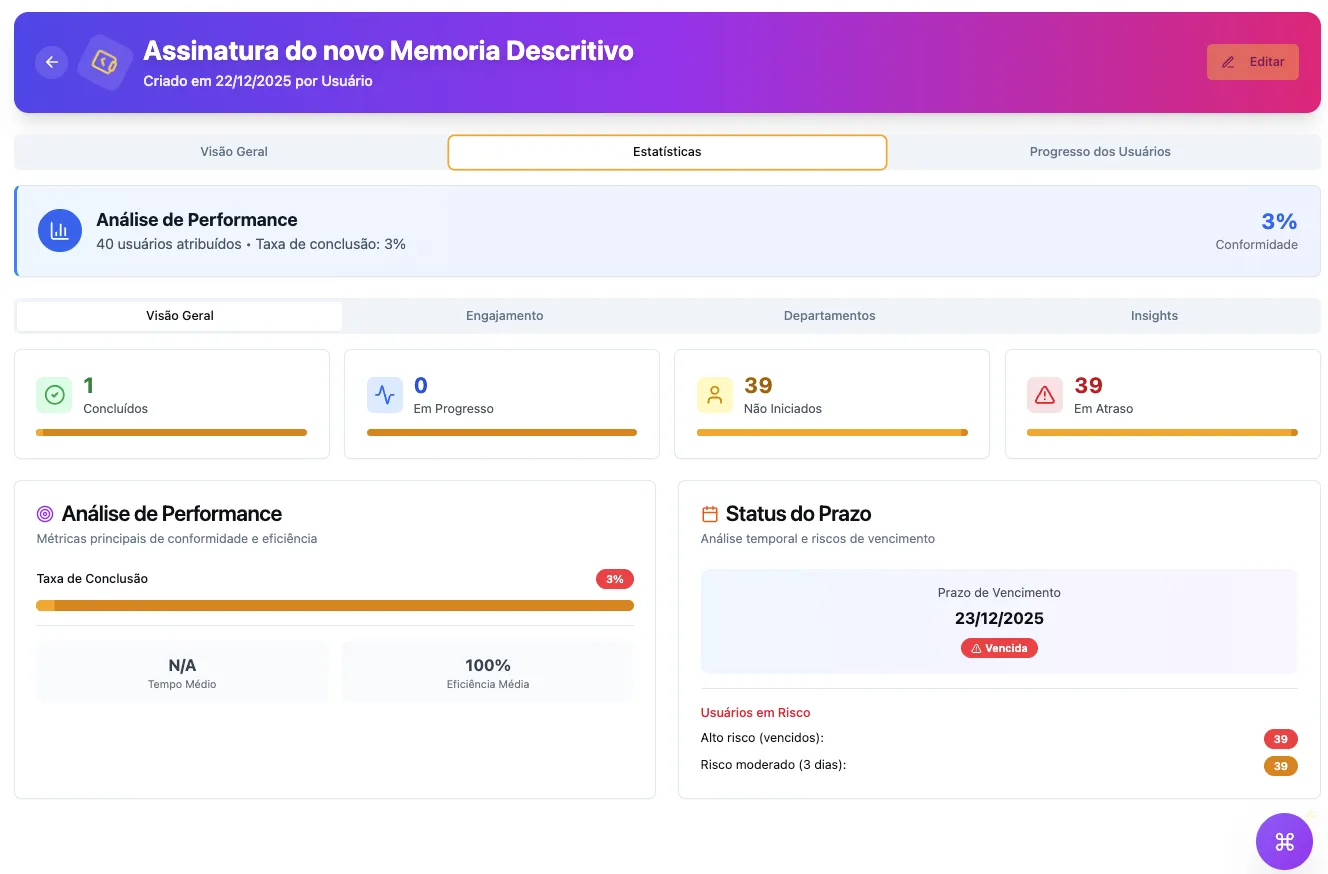
Example of a scenario where unit, shift, or role teams need to receive official content with confirmation when needed.
Operational pain
What usually fails across fuel station units and shifts
In fuel stations, procedures that differ by unit and safety alerts without reach turn into rework, noise, and operational risk.
Procedures differ by unit
Operational content loses effectiveness when it does not respect unit, shift, or role in the network.
Training scattered
Onboarding and attendant training live in systems separate from communication and procedures.
Safety alerts without reach
Critical alerts do not reach all units and shifts at the right time.
How Vindula enters
An official channel by unit, shift, and profile
Fuel station projects usually start with critical communication, centralized procedures, or safety alerts with read confirmation.
Segment by unit and shift
Each audience receives what it needs, without a flood of generic information from other units.
Centralized procedures
The official reference follows validity, ownership, and history inside the same environment.
Safety alerts
Critical communications with read confirmation ensure reach across all units.
What operations control
What becomes visible for units, management, and safety teams
With governance, the fuel station network reduces noise across units and gains more clarity on procedures, reading, and training completion.
Current procedures
Each unit consults the correct version in the same environment.
Read confirmation
Each shift receives content in its own context with tracking.
Training with evidence
Completion, pending items, and learning paths become easier to follow by unit.
Scenarios
What usually makes the most sense in fuel stations
In fuel stations, the purchase usually starts from the need to standardize procedures across units and ensure safety alerts reach everyone.
Safety notice
Critical alert for all units with read confirmation.
Attendant training
Mandatory learning paths with completion tracking by unit.
Procedure update
Current version, history, and fast consultation in operations.
Frequently Asked Questions
How does segmentation work across units and shifts?
Each unit or shift receives specific publications. The system respects the organizational structure of the network, unit, area, and role to prevent generic content from becoming operational noise.
How to ensure the correct procedure is being followed at each unit?
Vindula versions operational procedures with validity indicators, ownership, and history. Each unit always consults the most current official version in the same environment.
Do safety alerts reach all units?
Yes. Safety alerts and communications are targeted by unit and shift. When confirmation is required, the system records who received it, who read it, and when.
Is attendant training integrated with operations?
Yes. Learning paths and mandatory content are part of the same environment as communication and procedures. The attendant sees the training in the routine flow, not in an isolated system.
Can we start with a specific fuel station network problem?
Yes. The project can start with unit communication, procedure versioning, or safety alerts. The initial gain varies according to the network's priority pain.
Want to see how this applies to your fuel station network?
The guided demo can start from the procedure, communication, or safety problem that currently blocks your network the most.